
Content
May 6, 2026
For 25 years, USDA’s National Institute of Food and Agriculture Extension Risk Management Education (ERME) program has helped farmers and ranchers navigate the growing complexity of agricultural risk. Created under the Agricultural Risk Protection Act of 2000, ERME was established in response to shifting market conditions, farm policy reforms, and evolving crop insurance programs. In the more than two decades since, the risks facing producers have continued to grow. Producers have managed through the bioenergy and agricultural commodity boom cycle, the economic challenges of the Great Recession, and the supply chain and market shocks for the COVID-19 pandemic. They have also coped with droughts, floods, and other weather disasters, and now face disruption from trade and policy uncertainty that adds to the wide range of shocks producers have had to manage. Throughout these challenges, ERME has remained focused on equipping producers with the knowledge and tools to manage production, marketing, financial, legal, and human risks while strengthening the long-term success of their operations.
The establishment of ERME is due to the dedication and efforts of a small group of Extension agricultural economists who recognized the need for and importance of risk management education and worked deliberatively to see it become a reality. The group included Dr. Doug Jose, now a professor emeritus of the Agricultural Economics Department at the University of Nebraska-Lincoln. As a result of their efforts, four regional grant-making ERME centers were established in 2001. The four regional centers are located across the country at the University of Delaware (Northeast), the University of Arkansas (South), Washington State University (West), and the University of Nebraska-Lincoln (North Central), along with a Digital Center at the University of Minnesota. Through the regional centers, ERME delivers competitive grants, leadership, and producer-focused education nationwide.
Over its 25-year history, the program has invested more than $73.4 million through 1,963 projects that emphasize innovation, measurable outcomes, and strong public-private partnerships. Across 55 states and territories, more than 929,000 participants have taken over 3.19 million actions to strengthen risk management on their operations as a result of ERME-supported projects. Together, these efforts provide practical training and decision-making tools that improve farm resilience and economic viability.
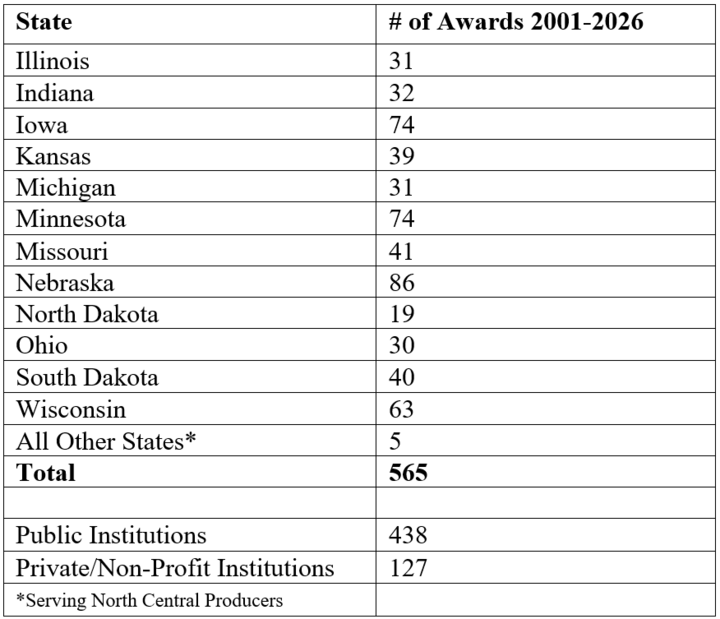
The North Central Extension Risk Management Education Center (NCERMEC), established in 2001 at the University of Nebraska–Lincoln Agricultural Economics Department, has played a central role in this success. Serving a 12-state region (Figure 1) stretching from Ohio to Kansas to North Dakota, NCERMEC has a long history of supporting risk management education programs across the region. Over 25 years, NCERMEC has awarded more than $21.7 million through 565 grants to public, private, and nonprofit organizations. These investments have directly benefited more than 185,000 farm and ranch participants across the North Central region. By supporting producer-focused, outcomes-based education programs, the center has helped producers adopt sound strategies, improve resilience, and position their businesses for future growth.
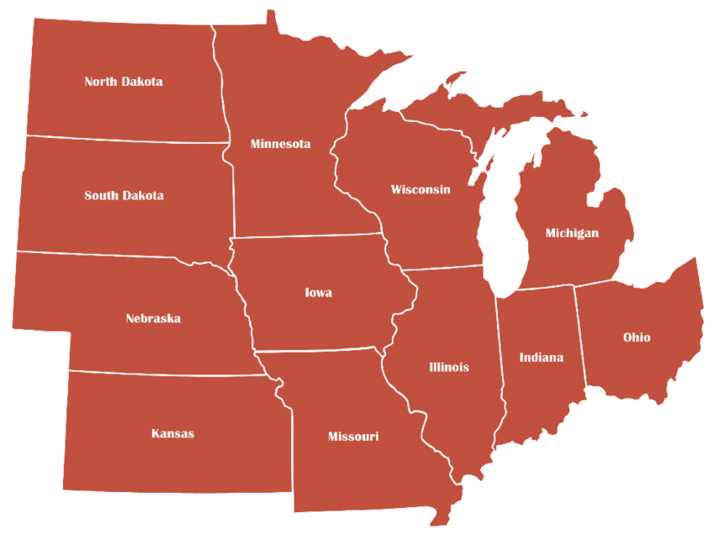
Figure 1. States served by the North Central ERME region.
What is Risk Management?
Risk management involves taking a deliberate and knowledgeable approach to dealing with one or more of the primary sources of agricultural risk. There are five general types of risk: production risk, marketing risk, financial risk, legal risk, and human risk (Crane et al. 2013). Managing risks requires resilience, adaptability, and access to resources. By staying informed, implementing sound risk management strategies, and leveraging technology and resources, farmers and ranchers can better mitigate these challenges, enhance profitability, and ensure the long-term viability of their operations.
Production risk refers to the uncertainty of the management of crops and livestock. Weather, disease, pests, and other factors affect the quantity and quality of the commodities produced.
Marketing risk is the uncertainty about prices producers receive for commodities sold and what their production costs may be.
Financial risk refers to a producer’s farm credit and the obligation and ability of the farm to repay its debt. The current economic uncertainty greatly affects a producer’s financial risk.
Legal risk results from changing governmental policies. Tax laws, chemical regulations, and changes in the Farm Bill all affect the legal risk a producer faces.
Human risk includes factors such as farm transition/succession, labor relations, disability, intergenerational issues, or divorce.
Competitive Grant Program
NCERMEC, in conjunction with the three other regional centers, conducts an annual competitive grants program to fund outcome-based risk management education projects designed to empower producers with the knowledge and tools necessary to navigate the uncertainties inherent in agricultural operations. The Request for Applications (RFA) opens each year in September and closes in November.
The 2026 RFA included three program areas to apply to: 1) Risk Management Education Projects that focus on a broad range of risk management education topics and activities; 2) Underutilization of Crop Insurance Projects specifically designated to support risk management education for producers that underutilize Federal crop insurance; and 3) Exploratory Projects that provide an opportunity to initiate ideas and/or emerging risk topic areas in a smaller planning, development, or pilot project. Forty-three applications requesting more than $2.3 million in funding were submitted to the North Central Center through the online application process. The Advisory Council recommended, and the center approved, 10 risk management education projects, 3 exploratory projects, and 7 underutilization of crop insurance projects for funding. The period of performance is April 1, 2026, through September 30, 2027. The 20 awarded projects represent approximately $1.33 million in total funding.
Table 1. North Central Region States and Funded Projects
Outstanding Project Award
To recognize outstanding efforts, the ERME program launched the Outstanding Project Award in 2019, honoring impactful projects from each region annually. Now in its eighth year, the North Central Center named Lincoln University’s Homero Salinas-Gonzalez as the 2026 award recipient for his project, Pasture and Livestock Risk Management Education for Missouri Small Ruminant Farmers.
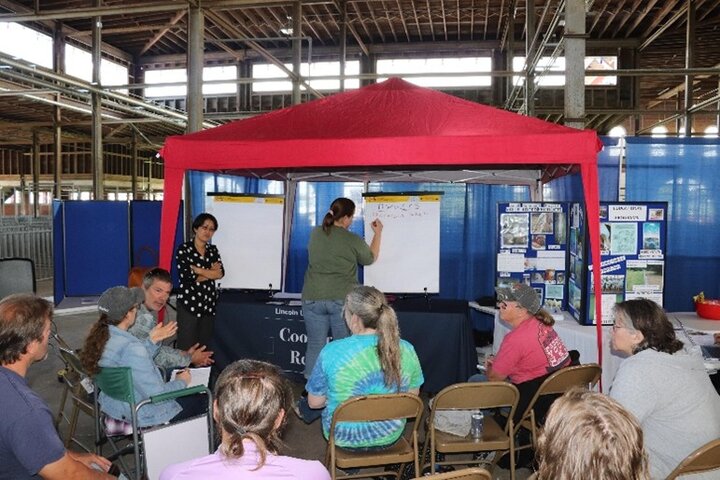
Participants engage in an educational workshop.
Missouri small ruminant producers often lack access to practical, research-based information needed to manage pasture conditions, parasite control, weather risks, and long-term business planning. In response, a series of field days, workshops, webinars, and online learning tools reached more than 320 producers with education designed to strengthen farm sustainability and reduce operational risk. Participants adopted key tools for pasture management, insurance decision-making, parasite prevention, and strategic planning, with hundreds reporting improved knowledge and new management practices. The project also updated the PRF Rainfall Index Tool for Missouri producers and created the Small Ruminant Risk Management Toolbox, an online resource hub that extended learning beyond the grant period. Overall, the effort improved herd health, grazing decisions, business management, and resilience, with one Missouri farmer sharing that the program provided “knowledge, resources, and most importantly, the confidence to make my farm more successful and sustainable.”
2026 Funded Projects
Congratulations to the following project directors whose risk management education projects were selected for funding in 2026:

For more information on the awarded projects and completed projects, please visit extensionrme.org.
References:
Crane, Laurence; Gantz, Gene; Isaacs, Steve; Jose, Doug; Sharp, Rod. 2013. Introduction to Risk Management – Understanding Agricultural Risk: Production, Marketing, Financial, Legal, Human. Extension Risk Management Education and Risk Management Agency, USDA. The publication can be accessed from the NCERMEC website at https://ncerme.org/risk-management/about-risk-management-education/
Christine Lockert, (402) 472-2039
Grants and Administrative Specialist
North Central Extension Risk Management Education Center
University of Nebraska-Lincoln
clockert2@unl.edu
Sheila Aikanathan Johnson, (402) 472-2757
Communications Specialist
Dept. of Ag Economics/North Central Extension Risk Management Education Center
University of Nebraska-Lincoln
sheila.johnson@unl.edu
Bradley D. Lubben, (402) 472-2235
Extension Policy Specialist and Director
North Central Extension Risk Management Education Center
Department of Ag Economics
University of Nebraska-Lincoln
brad.lubben@unl.edu